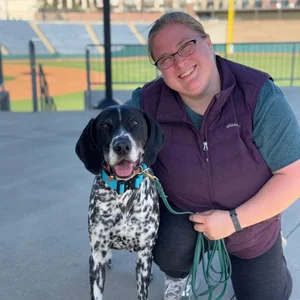
When the Dog in Front of You Changes the Plan
Yesterday I was full of motivation and ready to go. Meticulous planning, big goals. I was excited. I traveled, set everything up, got Kieran out, and then… everything fell apart.
Kieran wouldn’t work. He couldn’t focus. No searching, no effort, no engagement. Obedience he could do, but actively and independently searching was out. All he wanted to do was dart off or graze. That is not normal for him. I put him away, gave him a break, and tried again. Same thing. Right back to eating grass instead of his usual intense work. Big red flag.
I was disappointed. I was frustrated. And I really wanted the session I had planned. But instead of pushing or getting irritated with him, I stopped and asked myself: What is he telling me? This wasn’t normal behavior for him, and that was important to listen to. So I packed everything up, put him away, and we were done for the day.
Not long after, he had some pretty nasty diarrhea, and my hunch that he didn’t feel well was confirmed.
Training doesn’t happen in a vacuum. Our dogs don’t wake up every day feeling 100%, and when their behavior suddenly changes, that’s information. Not defiance, not stubbornness, not a bad attitude. Information.
That doesn’t mean every bad training session is a reason to stop. Dogs get distracted. Training falls apart. Sometimes the right answer is to adjust the plan, lower criteria, change the environment, or help the dog work through a challenge. But to make those decisions well, we have to know the individual dog in front of us.
Kieran loves to search. His normal is intense, active, independent work. A dog who normally throws himself into searching suddenly choosing to eat grass instead was a significant change, and that matters.
I think it can be easy to miss information like that when we are attached to the session we planned. I had traveled. I had set everything up. I had goals, and I was excited to work toward them. I wanted the dog I expected to show up that day. But good training requires responding to the dog who actually does.
Sometimes that means making the exercise easier. Sometimes it means changing the plan entirely. And sometimes it means packing everything up and coming back another day.
This was a really good reminder to give the dog some grace, listen to what was in front of me, and be willing to abandon the plan when it wasn’t right. Even when I really wanted it to work. Even when I was excited. Even when I was disappointed.
Sometimes the best training decision is to stop, take notes, and come back another day.
Thanks for the information, buddy.