Preparing Dogs to Work in the Heat
I’ve had several conversations about heat conditioning recently, and they all seem to come back to the same question: How do we prepare dogs for the conditions they’re actually going to encounter while still keeping them safe?
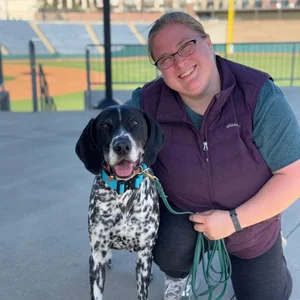
As I’ve thought about that question, it’s influenced a lot of the decisions I’ve made with Kieran this summer. Lately, I’ve been intentionally running him in the heat. Not because I’m trying to prove how tough he is. Not because I want to see how far I can push him. And certainly not because I think heat acclimation somehow makes a dog immune to heat injury. I’m doing it because Kieran needs experience working in those conditions, and I need to understand how those conditions affect him.
We live in the South. It’s hot. It’s humid. And as a working detection dog, Kieran needs to be prepared for that reality. That means gradually building experience and acclimation, but it also means paying attention. I need to understand how heat and humidity affect his searching, his recovery, and his overall performance. I need to know when he’s working effectively, when conditions are starting to impact him, and where the line is between productive training or deployment and too much.
As a Water Leak Detection Dog, the work Kieran does isn’t life or death. If environmental conditions are particularly challenging, we often have the luxury of waiting for a better opportunity to deploy. But not every team has that option. Some dogs are preparing for jobs where the search happens when the search happens. The person needs to be found. The evidence needs to be located. The work doesn’t stop because the weather is less than ideal.
This also applies to my nosework students. They may not need to be searching in the middle of the day in June, but if they plan to trial through the summer environmental conditions are still part of the picture. Heat, humidity, travel, and long days can all influence performance, and it’s worth understanding how your dog responds to those factors before you’re standing at the start line.
Regardless of what a dog is being prepared for, the same principle applies: We can’t make good decisions if we don’t understand how environmental conditions affect our dogs. I can’t know where Kieran’s limits are if we’ve never explored them, and I can’t responsibly decide when conditions are appropriate for him if I don’t understand how heat and humidity affect his performance and recovery.
And I know nobody wants to hear this in the middle of summer when it’s 95 degrees and the humidity is thick enough to swim through, but if you want your dog to be able to perform when it’s hot out, they have to spend some time actually being hot.
That’s where I think a lot of the nuance gets lost. A dog that spends all spring and summer training only in climate controlled buildings or on cool mornings may struggle when they’re suddenly asked to work, compete, or deploy in June. I’ve seen dogs absolutely fall apart in those situations. Not because they weren’t talented. Not because they lacked drive. Not because they were out of shape. They just weren’t prepared for the environmental challenges they were facing. At best, performance suffers. At worst, it becomes a safety issue.
That’s why heat conditioning and heat safety have to go hand in hand. When I take Kieran out in the heat, I’m not just asking if he successfully found the hide; I’m watching how he works. Is he actively searching for odor, or is he just going through the motions? Is he solving the problem quickly, or am I needing to give him multiple passes? Is there active sniffing happening, or is panting impairing his ability to do that? Is he missing hides he should be able to find? Is there more latency in his change of behavior or his final response? Those details matter just as much as the outcome of the search.
I’m also watching the physical side of the picture. How much and how wide is he panting? How quickly does he tire? How fast does he recover? How does his performance change at different times of day, and at different temperatures and humidity levels? All of that information helps me understand not just whether he can work in the heat, but when he can work well, when I need to adjust the picture, and when the better decision is to stop.
But it’s important to note that the decision to stop isn’t only about performance. It’s also about safety. One of the challenges with many high drive dogs is that they’ll continue working long after it’s in their best interest to do so. In some ways, that’s exactly what we’ve bred and trained them to do. But the same drive that makes them successful can also make them poor judges of their own limits.
I think one of the best points I’ve heard recently is that we shouldn’t wait for dogs to tell us they need a break. Make them rest before they decide they need to. Make them drink before they decide they’re thirsty. Pay attention before there’s a problem instead of after. Acclimation is not immunity. A fit dog can suffer heat injury, and an acclimated dog can suffer heat injury. It is our job to know when to step in.
Part of that means learning your individual dog. Know what normal panting looks like. Know what normal recovery looks like. Know what fatigue looks like. Know what heat stress looks like. And remember that the dog you have today isn’t necessarily the dog you had yesterday. Travel, stress, sleep, hydration, fitness, workload, temperature, humidity, and countless other variables can influence how a dog handles environmental conditions on any given day.
Our job is to prepare the dog in front of us for the work we expect them to do while giving them every possible tool to do that work safely. That’s the goal. Not proving how tough our dogs are. Not seeing how much heat they can tolerate. It’s about preparing dogs for the realities of their jobs and developing handlers who know how to keep them safe when those realities show up.