The Dog Isn’t Looking for Water: How K9 Water Leak Detection Actually Works
The dog isn’t looking for water. This is probably one of the most important things to understand about K9 Water Leak Detection. The dogs aren’t searching for water itself. They’re trained to recognize the odor associated with treated drinking water, specifically the chlorine or chloramine residuals used in municipal water systems.
That distinction matters because there’s water everywhere in the environment. Groundwater, rain, irrigation, ponds, creeks, puddles, wet soil. If the dog were simply searching for water, K9 Water Leak Detection wouldn’t be particularly useful.
Instead, the dogs are trained to discriminate between treated drinking water and non-treated water. During training, we intentionally expose them to puddles, ponds, irrigation, hoses, and other environmental water sources so they learn that the presence of water alone isn’t what we’re asking them to find.
But the dog is only one half of the team.
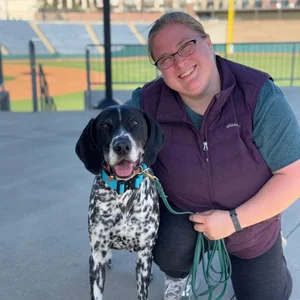
The handler’s job is to understand what the dog is communicating throughout the search. We’re watching for changes in behavior, working areas from different directions when necessary, evaluating whether the dog repeatedly shows interest in the same location, and considering environmental conditions that may influence where odor is accessible. What we’re ultimately identifying is an area of interest, not asking the dog to stand directly over a pipe and tell us exactly where to dig.
That becomes especially important because treated water doesn’t have to be visible at the surface for its odor to be detectable. Odor can move through the surrounding environment and become accessible somewhere other than where someone might expect to see water. There may be no puddle, no wet spot, and no obvious indication of a leak at all.
And the opposite is true, too. A wet area doesn’t automatically mean anything to the dog simply because water is present.
That combination of odor discrimination, trained search behavior, and handler interpretation is what makes a K9 team useful as part of a leak detection program. We aren’t searching for moisture, and we aren’t asking the dog to magically point to a break in a pipe. We’re using a completely different detection modality to help narrow a much larger search area to places that warrant further investigation.