K9 Detection and Acoustic Leak Detection Aren’t Competitors
K9 Water Leak Detection works best when we stop thinking about it as an alternative to the tools utilities already use. Acoustic leak detection and K9 detection are gathering different information. Acoustic equipment is listening for the sound created by water escaping from a pressurized pipe. A detection dog is searching for the odor associated with treated water as it escapes into the surrounding environment.
That means a K9 team gives a utility another way to investigate water loss, not a replacement for the equipment and expertise already in the toolbox.
There are conditions that can make acoustic leak detection more challenging. Background noise, pipe material, system pressure, leak characteristics, depth, and the surrounding environment can all influence what an operator is able to hear and how that sound is transmitted. The dog doesn’t need to hear the leak, but that doesn’t mean the dog replaces the acoustic equipment, either.
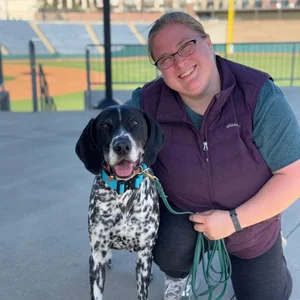
During a K9 Water Leak Detection deployment, our goal is generally to screen an area and identify where the dog is encountering target odor. The handler is watching changes in search behavior, evaluating repeated interest, working the area from multiple directions when necessary, and ultimately identifying areas of interest that warrant further investigation.
We are not expecting the dog to stand directly over a break in a pipe and tell us exactly where to dig. Odor moves. It can travel through soil, gravel, cracks, utility corridors, pavement seams, drains, and other pathways before becoming available to the dog at the surface. The strongest odor available to the dog may not be directly above the leak itself.
That is where combining detection methods becomes so valuable. Instead of asking an operator to investigate an entire property, several miles of distribution line, or a large area with multiple possible leak locations, a K9 team may be able to help narrow that search to specific areas of interest. Acoustic equipment and other leak detection tools can then be brought in to investigate those areas more closely, verify the findings, and pinpoint the leak before excavation or repair.
And the information can flow the other direction, too. System knowledge, previous acoustic findings, water-loss data, maps, pressure information, visible water, and observations from utility personnel can all help inform how we develop and work a K9 search.
It isn’t dogs versus technology. It’s another detection modality added to the toolbox.
No single leak detection method is ideal for every leak, every system, or every set of environmental conditions. Each gives us different information, and each has its own strengths and limitations.
For utilities, the question doesn’t have to be whether K9 Water Leak Detection is better than the technology they already use. A much more useful question is: What additional information can it give us?
When the goal is finding water loss efficiently and making better decisions about where to focus time, equipment, and excavation, more useful information is a good thing.